




Bucharest is an empire that behaves like the Austrian Empire during the Szeklers’ massacre 255 years ago, says a member of the Hungarian government. It is the last of a long suite of insulting statements and actions of high-ranking Hungarian dignitaries left without a reply from the Romanian government controlled by Liviu Dragnea and dependent on UDMR support. Paradoxically, at this time, the Hungarian government is building a real parallel state in Transylvania: it finances economic and agricultural projects, buys mass media, invests in education, religion and culture.
The open-minded involvement of the Hungarian state in Romania has gained momentum in recent years. There have been dozens of statements by ministers and lawmakers in Budapest that instigate the revisionism of the boundaries drawn by the Treaty of Trianon or which support the territorial autonomy of Szekler Land – an initiative prohibited by the Romanian Constitution. See Deputy Prime Minister Zsolt Semjén’s statement.
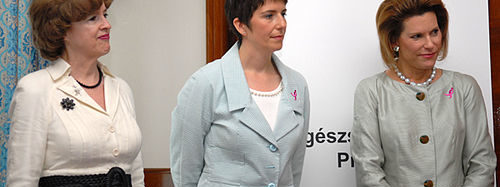
Budapest did not stop at statements: In early 2018, Katalin Szili, special commissioner of Prime Minister Viktor Orbán, mediated the collaboration between the three political parties of the Hungarians in Romania, a collaboration that led to the elaboration of a joint declaration by which they demand the territorial autonomy of Szeklerland.
Not to mention the constant offense in recent years, represented by the formal ban on the access of Hungarian diplomats to the receptions on the 1st of December.
Furthermore: Hungary defies the Romanian state by hosting Markó Attila, a former deputy arrested in absentia. “He received protection from Hungarian Prime Minister Viktor Orbán, so he is on the territory of the Hungarian state. It has been appreciated that judicial proceedings are likely to cause a strong state reaction that the right to property and the right to a fair trial have been violated, and hence decided to be granted protection. What does this protection consist of? He is allowed to stay on the Hungarian territory”, said his attorney for Digi24.ro in 2015.
In parallel, the government of Viktor Orbán spends huge sums in Transylvania for economic, cultural, educational and religious projects. It is FIDESZ’s assumed policy of rebuilding the great Hungarian nation before Trianon, even if it means breaking rules of cooperation with its neighbors. Not by chance, Hungary is increasingly provoking the surrounding countries with a significant Hungarian minority, such as Ukraine, Romania or Slovakia.
Extremely important: one of the major objectives of the Orbán government was to take over the control of the Hungarian language press. The outcome? An opinion poll commissioned by UDMR shows that Hungarians in Romania have practically ceased to be informed from Romanian televisions. The media consumption habits of the Transylvanian Hungarians have changed radically in the last decade and a half: while TV programs in Hungarian were followed by 25% of Transylvanian Hungarians, this proportion has grown to 75% while watching programs in Romanian have dropped from 50% to 10%. See more details here.
The aggressive politics of Budapest in the neighborhood has some explanations: the demographic disaster characterized by accelerated depopulation and the aging of the population, the political appropriation of Russia, the need for FIDESZ voters in the external area, and other internal political considerations.
How did Romania encounter an avalanche of Hungarian actions, statements and gestures? As if the Romanian state no longer exists. With the exception of a few timid reactions from the Foreign Ministry, the government in Bucharest does not play in this arena. Attention: we are also discussing the possible violation of internal and European rules on state aid or actions that may create economic imbalances in the sectors financed by the Budapest government.
Where does this power paralysis come from in Bucharest?
There are some clear explanations. Firstly, the PSD needs UDMR’s support in the Parliament as air, having a cooperation pact as well. UDMR under Kelemen Hunor no longer acts as a Romanian party, but has become the Romanian subsidiary of FIDESZ. So, the majority of the PSD – ALDE does not allow to raise its voice in the relationship with the Hungarian government because it risks losing UDMR parliamentary support.
Secondly, Liviu Dragnea has Viktor Orbán as a political and ideological model. It was not by chance that the German press began to characterize the head of the PSD as “Mini Orbán” – a copy of the leader in Budapest.
Dragnea is drawn both to the political success of the Hungarian Prime Minister and to his refined ideological recipe: Anti-Europeanism and nationalism. But Viktor Orbán’s economic recipe is seductive for Liviu Dragnea, who has begun to apply the solutions already tested in Budapest: taxing banks, multinationals, energy companies, plus the attack on foreign capital and the funds in the second pension pillar .
And all this from the PSD, a party that for years has played the ultranationalist card, and has even taken down the MRU government having as its principal accusation a measure devoted to Hungarian language education. Rather, such a tilting of extreme anti-Hungarianism towards complicity with the authoritarian and illiberal regime in Budapest.
There is another reason: the real inability of the Romanian state to manage the real needs of Hungarian citizens in Romania, especially from the two relatively isolated counties – Harghita and Covasna. Like most of the country, successive governments in recent years have failed to make HarCov projects for transport infrastructure, energy (only a small development regarding gas networks), telecommunications. The legitimate demands of locals for access to education and health services are also constantly ignored by the governments of Bucharest, and there are also obstacles made by ignorant ministers such as Valentin Popa. Plus force action against local symbols and, in general, political force as a way to control Hungarians in Romania. So it is no surprise that the locals look hopefully at the investments of the Hungarian government.
As the year 2020 is just around the corner, the 100th anniversary of the signing of the Trianon Treaty, an even more aggressive attitude of the Hungarian government is expected. Especially on the background of the silence in Bucharest. With an increasingly provocative Hungary in relations with Ukraine and Romania, but complicit with Moscow and the separatists in the Republic of Moldova, we are waiting for a complicated decade in the region.
Source: G4Media (Translation TFP)
















Leave a Comment
Your email address will not be published. Required fields are marked with *