




It is time for Europe to wake up and take the threat from the eastern flank seriously. Moscow actively supports the extreme-right and populist movements of Europe, creating a network of allies sympathetic to Russia throughout the European Union, writes James Wilson in EUobserver.
The main goal of the Kremlin is to create new areas of instability along the EU’s borders, to revise the borders, to challenge inter-ethnic and international conflicts, to break the unity of the Union with regard to the sanctions policy against Russia. Europe’s leaders seem to be blind to what is happening and fail to see the potential threat to Western democracies, writes Wilson.
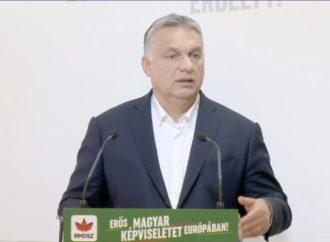
Hungarian Conservative Viktor Orban, along with Italian and Czech populists, is campaigning to lift the sanctions imposed on Russia for military aggression in Ukraine.
But this is only a part of Russia’s hybrid war on the West. Radical right-wing organizations in Hungary are funded by Russia to fight aggressively against NATO and the EU and to confront Ukraine.
Paramilitary camps
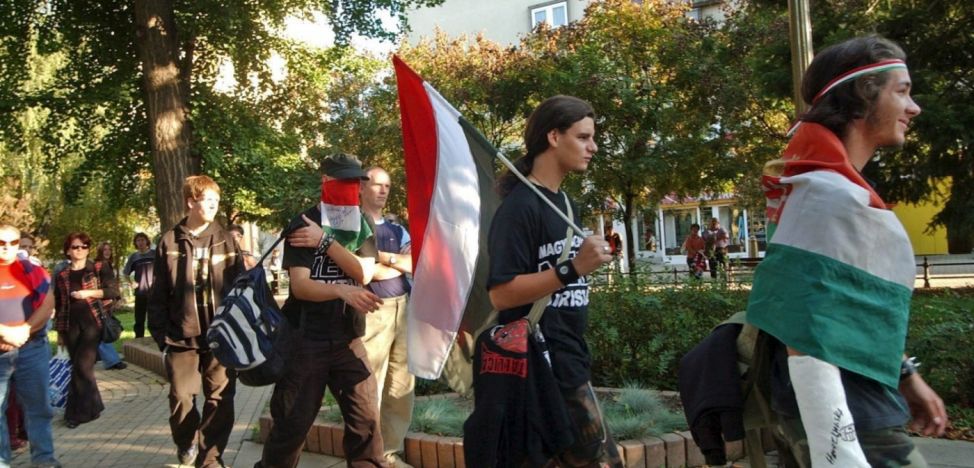
The Russian Special Services work actively with organizations such as the Hungarian New Guard (UJ Magyar Garda), the sixty-four Youth Movement (Hatvannegy vármegye Ifjúsági Mazgalom), the Young Army (Betyarsereg), the Hungarian Self-Defense Movement (Magyar Onvedelmi Mozgalom) Lupii organization (Farkasok).
They organize paramilitary training camps for its members, often involving Russian military personnel or Russian military attachés as instructors. These organizations or their activists often participate in organizing events that cause ethnic conflicts in Ukrainian Transcarpathia.
To coordinate all these actions and propaganda, the Russians have created a special online portal – hidfo.ru – which remains the key communication resource of pro-Russian forces in Hungary. The site publishes misinformation that comes from Russia and then spreads them through social networks, notes EUobserver. They also rely on their recruitment capabilities for military operations, such as Russian-led aggression in eastern Ukraine, where they engage in hostilities alongside pro-Russian separatists.
Promoting revisionist ideas
One of the main objectives of the current disinformation campaign is to instil the idea among members of extremist organizations that the annexation of the Crimea by Russia may constitute a precedent for Hungary to recover its territories, especially the Ukrainian Transcarpathian region. The Russian policy in the region aims to question the existing state borders and to bring about territorial conflicts to create instability.
In parallel, actions are being taken to promote Hungarian separatist movements in neighboring countries, Ukraine and Romania. Much of the funding for these activities comes from oligarchs close to Vladimir Putin, such as Konstantin Malofeev, who has business interests in Hungary, notes EUobserver. An important element of the Russian strategy is to make Hungary the center of the extreme right-wing “pro-Kremlin” movement.
For example, events organized by the far-right Hungarian right draw the participation of pro-Russian extremists in the UK (especially Jim Dowson of the Knights Templar) and Nick Griffin of the National Front. Confirming this trend, the International Writers and Special Training Center “Wolfs” organized drills for local activists in paramilitary organizations near Budapest in August. The head of the Center is a Russian citizen, Denis Riauzov, who previously took part in special Russian operations and is on the US sanctions list.
Transcarpathian Scandal
Hungary, which fought actively against the Soviets, now supports the modern policies of Russia against the West, writes James Wilson. But Orban not only works to weaken EU unity, but actively seeks to acquire territories previously belonging to Hungary, such as Transcarpathia in Ukraine, where 150,000 ethnic Hungarians live, representing less than 10% of the region’s population.
The current conflict between Budapest and Kiev over the Hungarian minority in Transcarpathia began in 2017, starting with a disagreement over Ukrainian legislation on minority languages and the law on education, but then escalated, Budapest threatening Kiev to block Ukraine’s integration processes in the EU and NATO. Hungary has also provoked the anger of the Ukrainian authorities by issuing Hungarian passports to Ukrainian citizens of Hungarian ethnicity who live in Ukraine where dual citizenship is not allowed.
This is precisely the kind of crisis that Moscow would like to actively stimulate, which could directly threaten not only the national and territorial interests of Romania and Ukraine but also the stability of the eastern flank of Europe.
The situation is becoming more and more tense and there is a danger that relations will deteriorate to the point when a conflict could be triggered and escalated, and fall out of control if the European Union does not intervene now to take serious action to remedy the situation, the newspaper points out.
Source: M.Adevarul















Leave a Comment
Your email address will not be published. Required fields are marked with *