





Last week, the European Parliament adopted a report prepared by my colleague
, Judith Sargentini, on Hungary, calling for the triggering of a mechanism under Article 7 of the EU Treaty. This is the first time the EP makes such a decision.
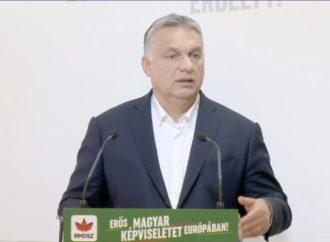
A few months ago, the European Commission used the same legal reference against the Polish government. Article 7 – much cited but rarely read – allows both institutions, as well as one third of member states, to address the Council to see if in an EU country the rule of law has skewed. I say this for several reasons, but primarily because Viktor Orban sought to hide the meaning of the EP debate, claiming that he is actually punished for anti-immigration policy. Whoever researches the political annals will find that the Hungarian Prime Minister has been criticized for his attitude to justice and the freedom of education and the press – important dimensions of a rule of law – long before the recent migratory wave reaches European shores and it so frightens the former liberal transfigured into a conservative fierce.
It is worth quoting from Article 7 and the passage that says that in order to find “a clear risk of serious violation” of the rule of law, a four-fifths majority is needed in the European Council. This is useful because many commentators have rushed to say that the Council would have been called for unanimity at all times in the application of Article 7. It’s not like that. A unanimous decision is needed only after the Council seeks to remedy – through dialogue and recommendations – the situation created by the state government in sight.
Turning to the political substance of the EP’s decision, I would mention three aspects that seem to me to be relevant. The first is related to the ambition of the Strasbourg-based institution to be no less than the Commission when it comes to the rule of law. If Juncker and Timmermans disciplines Warsaw, 70% of Europeans felt that in Budapest the will of the majority did not pursue the public interest, but that of the partisan majority.
Secondly, the EP’s decision was made possible after an important change in the EPP, the parliamentary fraction of Orban’s party. So far, the criticisms addressed to the Hungarian Prime Minister have been seen by the majority of the political group that I am part of as an attack by the left, which would seek to weaken us, the populists. The colleagues who supported Orban claim that it was better to have him next to us than against, because we could “domesticate” him. This time, most of the EPP members voted against their political ally.
Thirdly, I would observe that the EPP decision is a challenge for the other political families. If the people can punish Fidesz, could the socialists not even do something about the fraternal parties in Malta, Slovakia or Romania? Will the liberals in the EP not see the support given in the Czech Republic to Babis or – to us – to the formation of Tariceanu? These were the questions raised after the Sargentini report.
There is, of course, an electoral dimension in the whole dispute, you will say. That is right. The parties are in parliament and in the campaign. And the one for the future of the EP is coming …
Source:M.adevarul

















Leave a Comment
Your email address will not be published. Required fields are marked with *