




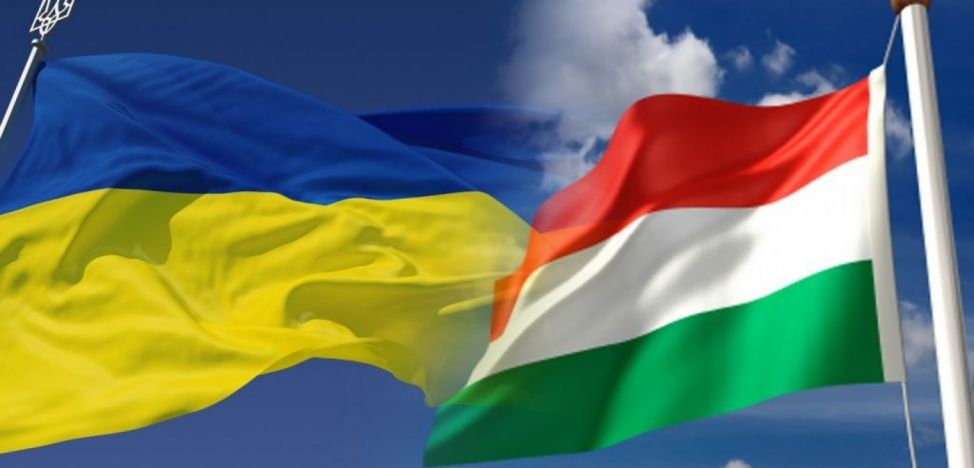
Ukraine’s geopolitical challenges are not only in the east of the country, where the government in Kiev is trying to regain control of separatist territories, but also in the relationship of Kiev with the Budapest government, in a context of escalating diplomatic tensions at bilateral level, the laws of education in Ukraine, and some of Budapest’s policies vis-à-vis the neighboring state.
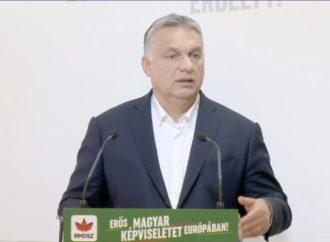
An important role is also played by the statement of the Hungarian Prime Minister Viktor Orban at Băile Tuşnad this summer, which basically said that Ukraine can not have a Euro-Atlantic future, while, in its opinion, Europe is guiding a primitive policy towards Russia.
“My point is that the EU is conducting a, and excuse me for the expression, primitive policy towards Russia, saying Russia is a danger. Indeed, there are Member States in the EU that can feel themselves in danger of Russia. We talk about the Baltic countries, we speak of Poland, history and geographical proximity confirm this, but most of the EU countries do not feel this danger, this danger, the Slovaks, the Czechs and we have no reason to believe that Russia would represent any danger, any danger to us. So it is very clear that the Baltic countries, Poland and other countries would benefit from additional NATO security guarantees from the EU to feel safe, but the rest of the countries should benefit from the development of bilateral relations with Russia. So, instead of this primitive policy towards Russia, we should have a much more specialized policy, much better defined with Russia”, Viktor Orban said.
“We will have to see what will happen to the Russian-American relations, what will the Americans do with these relations. We have to understand very clearly, Russia is self-employed as a country that is not safe if there are no buffer zones around Russia. So Russia will continue to create these buffer zones around the country. That’s what happened with Ukraine, but the Ukrainians have said clearly and bluntly that they do not want to be part of this buffer zone, they want to get closer to the EU, NATO and they want to build a modern Ukraine. I do not believe that any aspirations of the Ukrainians to join the EU or NATO is true. It is very clear that the aim of the Russians is to restore the old situation and to maintain its influence in Ukraine. So, in this context, we need to analyze the Russian-American relations a little”, added the Hungarian premier, who seems to disregard the conclusions of the EU-Ukraine Summit in early July this year.
Surely, the accession of Ukraine as an EU or NATO member state is in deadlock as long as the conflict in the eastern part of the country is maintained, either in a frozen form, but Kiev can benefit from a soft accession, here being spoken by the Customs Union, the European Energy Market or the Digital Union, which are totally absent from the political discourse of Budapest.
The Kiev decision on the new law on education is the moment of escalating diplomatic tensions, Budapest then directly opposed Ukraine’s adhesion to Euro-Atlantic structures, but a series of events previously underway were viewed by Ukraine as hostile actions of the Hungarian neighbors.
Trying to avoid this impasse caused by the law on education, Kiev has begun a series of negotiations with each state, already reaching a consensus with Poland since autumn 2017, a consensus completed by a bilateral declaration signed between the Ministers of Education of the two countries.
Negotiations continue now with other ethnic states in Ukraine, as is the case with Romania and Hungary, but the dialogue between Kiev and Budapest is becoming more and more tense, after a Hungarian post was set up in the Hungarian government for the Transcarpathian Development, sparking a rather strong reaction of the Ukrainians, who demanded clarification from Hungary. The new ministry, which also aims to build new kindergartens in the Carpathian Basin, basically claims the right to administer part of the national territory of Ukraine without Kiev’s permission. The gesture is even more ostentatious as Budapest will want to use money from the state budget, avoiding funding and European development projects.
Laszlo Papp, the Hungarian business commissioner in Kiev, was summoned at the beginning of August at the Ukrainian Foreign Ministry, where he was handed a letter asking Kiev for explanations to Viktor Orban both for the statements made at the Summer School in Baile Tusnad as well as for the new post established in the Hungarian government.
Obviously, the Hungarian diplomacy’s response was delayed, but Budapest changed the official name of this ministry, although the duties remain unchanged. It is very likely that the future minister for the development of Transcarpathia would have been denied access to Ukraine, instead, as a result of changing the name of the government portfolio in Budapest, Kiev will not have the legal framework to resort to this gesture.
However, the increase in Hungarian-Ukrainian tensions is becoming increasingly obvious, as was also pointed out in the Ukrainian Foreign Ministry’s position, which in a press release to the press after the Papp meeting noted: “Despite the constructive approach of the Ukrainian side to solve the problems the last actions of Hungary are testimony to the fact that the confrontation was chosen instead of cooperation and direct interference in Ukraine’s internal affairs. “
Taking all this into account, Ukraine considers that Hungary’s interest in the bilateral relationship may be to maintain the education laws dispute, avoiding a possible consensus that could diminish all these strategies.
The autonomy of the neighboring Hungarians has long become a symbolic policy of the Orban government, whose party already enjoys a part of their votes, such as the Hungarians in Transylvania, Romania recognizing dual citizenship as a result of their own policy towards the Republic of Moldova or the Hungarians in Transcarpathians already holding a passport issued by the Hungarian authorities, despite the Ukrainian disagreement already mentioned. Turning to Viktor Orban’s statements in Baile Tusnad, and taking into account the activities of Hungary in Ukraine, presented above, Kiev does not regard Budapest as just a portrait of Russia’s regional interests, but also as an actor interested in to take Ukraine out of the stunned state and victim state, in order to achieve its own strategic interests.
If this policy of Budapest proves to be supported by subversive actions, the legitimate question arises whether the governments of Bucharest and Kiev, but also of Bratislava or Belgrade, should have to provide a common response to the escalation of the Hungarian revisionist sentiments.
The position of the Slovak MFA is essential in this respect, drawing attention that “autonomy is not always the best solution for a minority; but on the contrary, it can sometimes lead to continued tensions and destabilization. ”
Source: Adevarul
















Leave a Comment
Your email address will not be published. Required fields are marked with *