





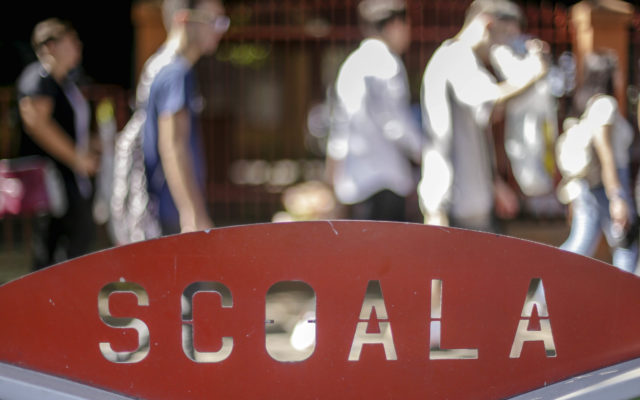
Students and youth from representative associations in Romania, as well as Hungarian high school students take a stand on the problem of teaching Romanian language in minority schools. The Youth Council, the National Council of Students and the Hungarian High School “condemns the way in which the Ministry of National Education and the Government of Romania decided to regulate the problem of teaching Romanian language in primary education, teaching classes in the languages of national minorities”, young people say in a “Young people in Romania condemn the sabotage of teaching Romanian language in schools of national minorities”.
“The Romanian Youth Council (CTR), the National Council of Students (CNE) and the Association of Hungarian High Schools in Romania (MAKOSZ), the legitimate representatives of the Romanian youth, pupils and Hungarians, express their disappointment regarding the adoption of measures regarding the teaching of Romanian language in primary education, teaching classes in the national minority language, in the absence of extensive debates with interested actors, respectively in the lack of proper substantiation of some decisions that may affect their integration in the Romanian society “, states in the position common organization of the three organizations.
Young people ask the Government for the following:
• to abolish the requirement that “in primary education, in classes taught in the languages of national minorities, the Romanian language and literature classes provided in the curricula are taught by teachers with specialized higher education.
• pilot the decision in schools that have this capacity, so that the financial impact on the human resource can be assessed, but also the results of this measure on learning.
• changes at university level in the training of teachers interested in teaching Romanian at the schools concerned.
Pupils and youth associations claim that replacing teachers with Romanian language teachers who would teach children this discipline up to the fourth grade raises the following issues:
• “There will be problems in setting up the didactic norms of teachers who should be responsible for teaching the Romanian language in primary classes taught in the languages of national minorities”.
• “In the nomenclature of specializations at the Bachelor’s level, the specialization” Romanian as a non-native language “is missing and the graduation of the Romanian Language and Literature Department does not provide the necessary professional and psychological training in the teaching of Romanian for non-natives” – a problem reported by the ” Babeş-Bolyai “University of Cluj Napoca, one of the few actors in the educational field who welcomed the initiative of the Ministry of National Education, recall the young people.
• “There are premises for the occurrence of budgetary imbalances at the level of pre-university education units”.
• “We are afraid of the negative impact on the people who are currently teaching Romanian in these classes. Implied salary cuts could lead to the demotivation of staff, leaving the system to leave the education system without satisfactory remuneration”.
The three organizations recall that, by Government Ordinance no. 9/2018 adopted by the Government on 23 August 2018, the National Education Law no. 1/2011, introducing a new paragraph (7 ^ 1) after paragraph 7 under Article 263. This new paragraph provides that “in primary education, in classes with teaching in the languages of national minorities, the Romanian literature included in the curricula are taught by teachers with specialty higher education “.
Young people criticize the adoption of the Ordinance “less than a month before the start of the school year, in the absence of ample debates.” Also, the amendment “was not made public in a clear, unequivocal way (eg, the press release issued by the Ministry of National Education, following the adoption of the GO we refer to, lacks the word” minority “, not mentioned this measure), say the associations.
Source: G4media
















Leave a Comment
Your email address will not be published. Required fields are marked with *