





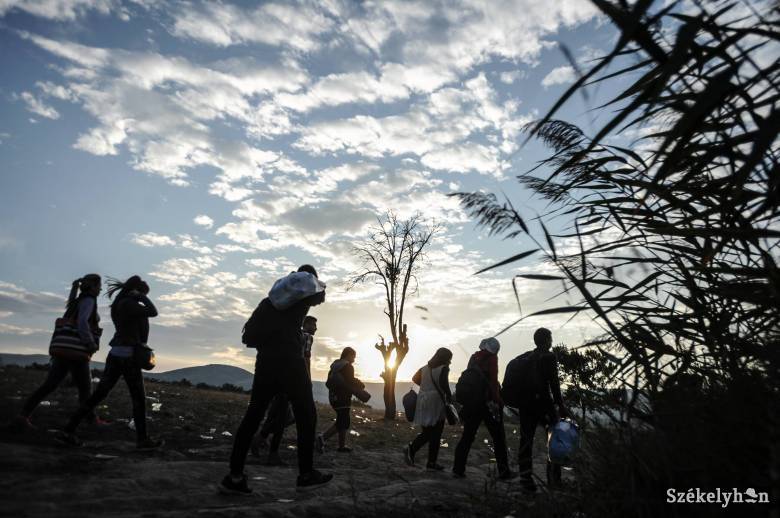
Can migrants come to Romania in a large number? The question arose after Bucharest was ready to accommodate five asylum seekers. Experts say there is no chance for a migrant-friendly policy because of the high level of rejection of the population, Romania has only made a diplomatic gesture with the offer. An impassable road. Although the country is struggling with labor shortages, it would be difficult to build a migrant-friendly campaign in Romania.
Romania, along with several other EU states, indicated its willingness to take on some migrants from those who had been on two civilian lifeboats off the coast of Malta since the 22nd of December last year. For many of the countries closest to the ships, none have given permission to moor. Malta and Italy also severely restricted the reception of ambulance ships in 2018 and did not want to show tolerance. The situation became dramatic by January, and finally, last Wednesday, the Maltese government gave permission for the vessels to dock after receiving guaranty to house more than two hundred earlier arrivals from some EU countries.
But what is the attitude of the Romanian authorities to the migrant issue and what can we expect in the near future? It was customary for Romania, the country usually plays in its foreign policy to wait for things to settle down, and it takes utmost account of the position of the United States or of the major EU Member States.
“So the enforcement of the Romanian national interest is mostly governed by the establishment of good relations with the big countries, and hopes” said Gergely Illyés, political scientist.
According to him, it is also disturbing that in the case of the Romanian foreign policy the government and the head of state would in many cases follow different paths, which can be traced back to the confusion of the relevant provisions of the Romanian constitution and to the customary law.
A staff member of the National Policy Research Institute in Budapest said that Romania has so far exercised caution with regard to illegal migration or, in general, European immigration policy, publicly speaking, but the government has not expressed a clear position on the issue. Nonetheless, Klaus Johannis in the European Council said that there should be no mandatory quotas, only voluntary admission – the analyst added.
“The current decision that Romania has agreed in principle to accepting some migrants can be seen as a diplomatic gesture: Romania, as President-in-Office of the Council of the European Union, felt that this step was expected from the country. However, this decision also puts in brackets the very important question of whether there will be migrants who want to settle in Romania and how can the governments impose the settlement of the migrants to a relatively poor country in a very differently developed EU”, stressed Gergely Illyés.
He also said it was important to say that this issue is only very marginal in the Romanian public, and one can rarely read in the press that there are serious debates in the European Union on this issue.
“Moreover, in general, the Romanian press deals with the EU and the main European issues very superficially and rarely. Romania has hardly been affected by illegal immigration, and some people are sometimes caught in the border area near Timisoara, but news about these cases usually do not reach the threshold of the Bucharest press”, the analyst said.
Sociologist Vladimir Ionaș reminded Krónika that, according to a previous survey by the Avantgarde, the majority of Romanians – fifty-five percent – have a negative opinion of migrants from Muslim countries.
“The high rate of rejection may be a surprise for those who think that Romania is a leader in Europe for immigrant citizens. However, if we take into consideration the rhetoric of Romanian opinion-formers, influencers of public discourse in the last five years, the migration policy of some neighboring countries, the European news on Muslims, the Romanian opinion is understandable. All the more so because in Romania there was a complete lack of voices that would have publicly supported a migrant support policy”, as the expert of Avantgarde said. As he said, despite the fact that, after the millions of Romanian people wanting to live better, the country is struggling with labor shortages, it would be extremely difficult to build a migrant-friendly campaign similar to Germany to anyone in Romania.
Ionaș does not expect Romania to accept a large number of immigrants. There are currently five migrants, and when the Bucharest authorities discuss the final number of people to be accommodated, they must take into account the rejection on behalf of the Romanians and, in particular, the politics and the Orthodox Church.
Source: Krónika (Translation TFP)

















Leave a Comment
Your email address will not be published. Required fields are marked with *