


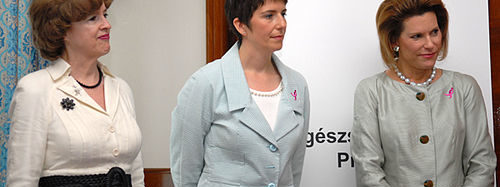


Kristof Terhes, the general manager of FGSZ (the Hungarian “Transgaz”, majority owned by the Hungarian state through Mol), contrary to the most basic diplomatic practices, humiliated us, defied and dashed right in the capital of our country! Right in the year we celebrate 100 years from the Union of Transylvania with Romania. On one hand, we have to admit that the Hungarians’ statements are really true! We have not “forced” the Hungarians to be stupid and disinterested in the wealth we have and which we still have! On the other hand, we are wondering why this arrogance, even a fuss from the part of a representative of the Hungarian state. That is why we will try to answer the question “yes” why ?! “. And what would be the solutions.
Kristof Terhes, the general manager of FGSZ, Hungary’s gas transport company, part of the MOL oil group, where the Hungarian state is the most important shareholder, had a press conference in Bucharest, the project of BRUA pipeline (Bulgaria – Romania – Hungary – Austria) and the gas to be extracted from the exclusive economic zone of Romania in the Black Sea by American companies (ExxonMobile, The Carlyle Group through Black Sea Oil & Gas) Lukoil) and Austrian (OMV).
We recall that the BRUA project would have a length of 1,318 km, out of which 478 km represents the length of the pipeline on the Romanian territory. The first phase of the project includes the construction of the 478 km pipeline between the Podişor technological node and Recaş in the western part of the country. For this segment of the pipeline, Transgaz obtained European non-repayable funds worth 179 million euros. The total value of the project is 479 million euros, so the difference will be covered, according to the national legislation in force, by the Romanian consumers, by increasing the transport tariffs.
BRUA II, which will connect the Black Sea gas to BRUA via a 308-kilometer pipeline from Tuzla to Podişor, costs 298 million euros. Also from the tariffs paid by the Romanian consumers this pipeline will be made.
The first defiant affirmation of the FGSZ chief was that Romania has no capacity to consume the Black Sea gas because it has no industry, it does not have petrochemistry and the population is connected to the grid only at a rate of 30-35% as opposed to 95% of the inhabitants of Hungary. “You can not consume gas in Romania. You do not have petrochemistry, you have no industry, you can not use natural gas as raw material. I do not know why you closed petrochemistry. Every day this project is delaying you lose millions of euros. Its launch will bring advantages first to the Romanian economy and then to ExxonMobil and OMV. What about gas? Do you burn it, make a big fire? “, Kristof Terhes ironically said during the press conference.
In fact, what is our dissatisfaction ?! That we are told the truth in the face ?! Because the FGSZ director is right! Indeed, we no longer have petrochemistry, we no longer have combined fertilizers, we have only a few gas-fired power plants, and the population is too poor to heat up with gas, even if it passes its pipe in front of the house! So we do not have how to consume the gases that will be extracted from the Black Sea! At least not at this time!
The problem is that the Mol group, for example, although Hungary has almost no gas and oil resources, has a highly performing petrochemical industry! So does the Austrian OMV group: it has no resources but has one of the largest refineries in Europe (in Vienna) and one of the largest petrochemicals (Borealis).
Before 1990, Romania had a capacity of 34 million tons a year in 10 refineries: Petrobrazi Ploiesti (its construction started in 1934 due to the efforts of the Romanian company Creditul Minier), Arpechim Pitesti, Petrotel Ploiesti (also known as the Refinery Romanian-American before 1945 or Teleajen after the War, now Lukoil), Petromidia, RAFO Onesti, and small refineries, amounting to about 15% of the processing capacity – Astra Ploiesti (founded in 1880), Vega Ploiesti belonging to KMGI), Steaua Română Campina (established in 1895), Dărmăneşti and Petrolsub Surplacu de Barcău. Today only Petrobrazi, Petroltel, Petromidia and Vega are functional! And petrochemistry is only done at Petromidia!
Before 1990, there were 10 chemical fertilizers in the country (fertilizers were obtained from gas). Now there are only two: Azomureş, held by the Swiss people at Ameropa, and the Năvodari Chemical Fertilizer Plant, has become a section with 80 employees (since about 2000 before 1990) and a very small annual production of several Italian businessmen)!
Are the guilty Hungarians that, after privatization, the new owners (Romanians, Russians or Austrians) have closed capacities, and some have sold their scrap iron equipment ?!
After taking over Petrom, the Austrians from OMV decided to shut down the Doljchim plant (and even sold the old plants, old ones, and the old iron) and the Arpechim refinery. Nearly all other refineries (large and small) were closed and 7 of the fertilizers combines, owned by Ioan Niculae through InterAgro, were closed (either in insolvency or even bankruptcy).
Today, fertilizer imports represent the solution to rescue the Romanian agriculture! And farmers complain that they pay two, even three times more on fertilizers than before closing the combinations! And, moreover, I do not even know what they buy when I get them from abroad, because there is no lab to analyze the products!
The most important fertilizer exporters in Romania are from Ukraine, Hungary, Russia and Turkey. We recall, over time, that the Russians (the largest gas exporters in Europe through pipelines passing through Ukraine) accused Kiev of “stealing” Gazprom’s gas from pipelines and using them also to produce chemical fertilizers, which they export. We are wondering what will happen next year when the Russian gas transit contract between Gazprom and Naftogaz (Ukraine) expires ?! As Ukrainians can no longer “steal” the pipes, because there will be no more gas through those pipelines, where will Romania import fertilizers? Where to go: from Russia and Hungary! But at what prices ?! And if Romanian farmers will not have money to buy import fertilizers, what will happen to Romanian agriculture ?!
So there is no fault of Kristof Terhes, the general manager of the Hungarian gas carrier, that we are disinterested, indifferent, indolent and mindless! Until now, although important gas discoveries have been announced not only in the Black Sea but also on land, we have no strategy to do with them! What is a big nerosis on our part: to sell raw materials (gas, electricity, scrap, logs, etc.) instead of exporting products with the highest added value!
In the view of the FGSZ representative, the best thing that Romania can do is to develop the gas infrastructure so that the Black Sea gas can be exported. Actually, the Hungarians come and say, “If you have nothing to do with them, give them to us, that we know what to do with your gas!” Can we reproach something from this point of view ?!
nvolvement of Hungarians
Although they have virtually no cubic millimeter of natural gas production, the Hungarians are extremely involved in this field.
First of all, although there is even a special European Commissioner for the Energy Union (Maroš Šefčovič of Slovakia), Budapest has decided that BRUA gas pipeline should remain only BRU (Bulgaria – Romania – Hungary). Otherwise, “goodbye to the Energy Union”. At least direct. The Hungarians’ motivation: the pipeline between Hungary and Austria would have been an unnecessary cost. “In fact, we have made a favor that the gas is no longer going to Austria, a $ 1 billion gift in a redundant infrastructure,” he said arrogantly, the general manager of the Hungarian “Transgaz”.
The head of the FGSZ said that production in the Black Sea will reach Hungary, and from there in Slovakia and, indirectly, through existing pipelines to Austria. Transport will also be available to Ukraine, Serbia or Croatia. Even the Romanian Black Sea gas could reach up to the Baltic countries via Hungary, after the necessary investments between Slovakia and Poland. Basically, the message was that “the Romanian gas distribution center” will be in Hungary.
Of note, Budapest is careful not to upset Maroš Šefčovič: he tells us that the Romanian gas reaches the native country of the European Commissioner, Slovakia, a country almost entirely dependent on gas imports, of which more than 80% come from Russia!
Besides “redesigning” the European gas transport map, Hungary has also been involved in supply. Following an auction organized in December 2017, the gas transmission capacity through the BRUA was reserved by 2037 by two companies in Hungary: MET (owned by a close friend of Prime Minister Viktor Orban) and MFGT (the company specializing in natural gas storage, part of the MVM integrated energy group, owned by the Hungarian state). Otherwise, domestic producers will have to negotiate with the Hungarians the sale of natural gas extracted from Romania.
In addition, FGSZ owns the only platform (the “Stock Exchange”) for auctions on interconnection capacities of gas transmission systems in the region. The Romanian gas carrier Transgaz invokes in this respect a European regulation, which stipulates that the adjacent transport operators use a common trading platform. In the case of Romania, Bulgaria, Hungary, Slovakia, Croatia and Greece, the Regional Reserve Capacity Platform (RBP) is managed by the Hungarian company FGSZ.
Thus, companies had to submit offers for BRUA in Budapest! In addition, in order to bid for the capacity reservation on pipelines linking Romania to Bulgaria and Hungary, they have to bid on the FGSZ platform as well. As a matter of fact, this was the case for the allocation of capacity for the Isaccea-Negru Vodă pipeline from Romania to Bulgaria for the Giurgiu-Ruse pipeline, but this time it is about import (meaning from Bulgaria to Romania), as well as the relation Romania – Hungary through the gas pipeline Szeged (Csanádpalota) – Arad, both for import and export.
We do not understand why Transgaz was not able to set up its own platform! Especially that the gas to be traded (at least at the beginning) is only Romanian!
Hungarian foreign minister wants pressures on Romanian gas
Hungary’s Foreign Minister Péter Szijjártó, present at Washington as the speaker at WGC2018 (World Gas Conference), the industry’s most important event, said in the section “Future of the European Energy Market” that the international pressure on Romania for the extraction of gas from the Black Sea should continue, while ensuring gas flows in the region in both directions. Of note, European Commissioner Maroš Šefčovič was also present in the same panel. Romania had no official speaker at this event!
“The pressure must be increased on the countries in the region, which violate European regulations and do not ensure the transit of gas in both directions through interconnectors. Such countries are Romania and Croatia, “said Péter Szijjártó.
On the other hand, he said that “small countries can not afford to invest on their own account (n.r. – in the gas transport infrastructure). If we get European or international support, we can do this, otherwise we can not buy gas from the US or elsewhere to diversify our supply, “Szijjártó said.
“Energy security for small countries in Central Europe should not be a matter of geopolitics,” Szijjarto said, referring to the Nord Stream 2 gas pipeline meant to supply Germany and the Central European countries with Russian gas, bypassing Ukraine through the Baltic Sea.
The Foreign Minister explained that Hungary has no alternative for ensuring gas supply safety that complements renewable energy sources, hence opted for nuclear energy to reduce greenhouse gas emissions. Currently, the second nuclear power plant is being built at Paks, together with Russians at Rosatom, which also provides 85% of the project’s funding. When the power plant is completed, 70% of Hungary’s electricity will come from nuclear sources. “When we talk about ecological and sustainable energy, we think nuclear energy is the cleanest, safer and cheaper in our case,” Szijjarto said.
And at a meeting with Rick Perry, the US Secretary of State for Energy, the Hungarian minister said the pressures should continue and the Black Sea project be continued. “The international pressure must be maintained in order for Romania to start production in the Black Sea in 2022,” said Péter Szijjártó.
In other words, Szijjártó “takes Russia’s part in the Nord Stream 2 project, criticized by the European Union, Ukraine, Poland, Lithuania and the United States, and explains why Hungary” has “overwhelmed” Russia with the nuclear issue. However, the statements are that Budapest does not give up on the Romanian gas!
It is strange that Péter Szijjártó asks the US Energy Minister to press for Romania to begin production in the Black Sea, the FGSZ General Manager asks us to export the gas to Hungary because we still have nothing to do with them but the same Hungarian minister Foreign Minister says at WGC2018 that there is no alternative to Hungary’s gas supply, that is why he is building the atomic plant together with the Russians!
We do not even understand the Hungarians: do they have or do not have access to an alternative to Russian gas, which provides about 85% of their domestic needs? Honestly, we only suspect a double language!
Our opinion
Our opinion is that Hungary sees its interest! And his interest is “to play on two heads”: on the one hand he does not want to upset Americans, and on the other hand he has become a “bridgehead” of Russian interests in Europe. And, to achieve both ends, he makes every possible effort.
For example, Russian interests are like no other gas to reach the region! The BRUA gas pipeline is being built for southern and south-eastern Europe to be supplied with natural gas from sources other than the Russian Federation. A source is represented by Azerbaijan and, in the future, Iran and probably Qatar. But for the gas to reach Europe, it is planned to build two pipelines: TANAP (Trans-Anatolian Natural Gas Pipeline, which runs Azeri gas to Turkey) and TAP (Trans Adriatic Pipeline, which should reach Italy via Grecia, Albania and the Adriatic Sea). But Turkish gas would also go to Turkey via the Turkish Stream (through the Black Sea) pipeline. Italy would be the largest consumer of Azeri gas. But recently, the Italian Environment Minister has told TAP that it is a “useless” project. If Italy does not want the gas anymore, the TAP project would have questioned. the supply of southern Europe to Azerbaijan. Bulgaria would interconnect with Greece, interconnected with Turkey, and then Russian gas (via the Turkish Stream) could take Central Europe via BRUA.
Western Europe would also be supplied with Russian gas through Nord Stream 1 and 2. Both projects overwhelm Ukraine, a country with which Russia has at least cold relations.
Thus, the sure “obstacle” to “flooding” Europe with Russian gas is the Romanian gas!
Therefore, we think that it is not by accident that the director of the FGSZ made the denigrating statements in Bucharest! Neither the Foreign Minister accidentally called for the continuation of international (especially American) pressure to start gas production in the Black Sea. It is precisely the double language of the Hungarians that we invoke: the Americans say one, but they act in such a way as to please the Russians!
These days, legislation on the exploration and exploitation of offshore gas fields is being discussed in Bucharest. There are big misunderstandings: on the one hand, producing companies want to get the most profits (and pay as little as possible), and on the other hand, the government wants the state to get as much money as the budget, and the firms some of the “partners” representatives of the authorities to get as many works from the producers (ie, in turn, get the most profits).
The most important investors are ExxonMobile, Carlyle Group and OMV. But OMV is more silent! And that’s probably because, as there are rumors in the market, one of OMV’s most important shareholders is even the Russians! Moreover, OMV brought a German general director who has been working with the Russians for some 20 years (some say that his election to the Austrian group was made at the insistence of the Russians). Rainer Seele, OMV’s CEO, was chairman of Wintershall’s Board of Directors, 100% owned by BASF, but which, since 1992, has become the most important vehicle by which Gazprom has exported natural gas to the south and south-east of Europe. Seele, who has, in the meantime, learned Russian language to get the best understanding with Gazprom’s representatives, has succeeded not only in introducing Wintershall to its North Stream 2, but has now also introduced OMV. So, a possible competition of Romanian gas for “Russian friends” would not be desirable for OMV! Especially since the Austrian group has much more to gain from Gazprom than from the Black Sea gas!
The only people who really want to start gas production in the Black Sea are the Americans at Exxon and Carlyle. But it’s getting harder and harder for them!
And, “over the apex”, precisely these days, when the offshore legislation is being discussed, the remarks of the representatives of Budapest came up! Our opinion is that it is precisely about the sensitivities between the Romanians and the Hungarians! Especially in the Centenary Year, when we celebrate the 100th anniversary of the Great Union.
Basically, the Hungarians tell us: “Your BRUA is building on your money, which will carry your gas to us, and we do what we want with them”!
The Hungarians rely on the annoyance of the Romanians, who obviously will not stand such an affront! And consequently, in order to “die the goats of the neighbors”, the Romanians will go on the idea that, rather than getting the Romanian gas on the hands of the Hungarians, I better not get them out of the ground! And the legislation will be approved in such a way that Americans “will lose their pleasure” to invest in the Black Sea!
In this way, the Hungarians see both goals: they have no fault that US firms will not extract gas from Romania and export to Europe, and the Russians will remain the only ones to use the BRUA pipeline to export their own gas to Europe !
















Leave a Comment
Your email address will not be published. Required fields are marked with *